Problem Statement: What is food insecurity? Food insecurity is defined “as a household-level economic and social condition of limited or uncertain access to adequate food.” (USDA, https://www.ers.usda.gov/topics/food-nutrition-assistance/food-security-in-the-u-s/definitions-of-food-security/)
According Feeding America, 1 in 7 people or 1,800,530 people in Ohio face hunger. Of this population 1 in 5 or 517,450 are children facing hunger. While the 2025 data is still being compiled for Mercer County, Ohio, in a publication released by the Ohio Association of Foodbanks, in 2024, 2,942 households were serviced in Mercer County, Ohio due to food insecurity.
The household breakdown is as follows:
Households without children | Households with children | |||||
Households | Adults | Seniors | Households | Adults | Seniors | Children |
1,910 | 1,613 | 2,034 | 1,032 | 1,823 | 376 | 2,449 |
The following distributions (in pounds) were made to Mercer County, Ohio:
Donated | TEFAP | CSFP | PURCHASED | ARPA | LFPA | ACP | OFP |
84,596 | 70,514 | 17,502 | 0 | 5,426 | 29,500 | 76,626 | 40,671 |
TEFAP stands for The Emergency Food Assistance Program, a U.S. Department of Agriculture (USDA) federal program that helps supplement the diets of low-income Americans, including elderly people, by providing them with free, emergency food assistance.
CSFP stands for The Commodity Supplemental Food Program, a U.S. Department of Agriculture (USDA) program that improves the health of low-income seniors (aged 60+) by providing monthly food packages to supplement their diets.
ARPA most commonly refers to the American Rescue Plan Act of 2021, a $1.9 trillion federal stimulus package signed into law in March 2021 to accelerate the U.S. recovery from the COVID-19 pandemic’s health and economic impacts.
LFPA stands for the Local Food Purchase Assistance Cooperative Agreement Program, a USDA Agricultural Marketing Service initiative that provides funding to state, tribal, and territorial governments.
ACP stands for The American College of Physicians, the largest medical specialty organization in the U.S. and the second-largest physician group, representing 161,000 internal medicine specialists, subspecialists, and medical students.
OFP stands for Ohio Food Program, a state-funded program designed to combat hunger by providing nutritious, shelf-stable, and protein-rich food items to Ohio’s 12 Feeding America foodbanks.
Mercer County, Ohio historical food insecurity trend for services provided by only Feeding America:
2019: 9.3% Food Insecurity Rate
2020: 8.3% Food Insecurity Rate
2021: 7.5% Food Insecurity Rate
2022: 11.0% Food Insecurity Rate
2023: 11.2% Food Insecurity Rate
Initial statistics show the insecurity rate being between 11.4% or higher in 2026.
Talking with Job and Family Services in Celina, Ohio, approximately 4.5% of Mercer County is receiving SNAP Benefits as of December 2025.
Talking with Call Food Pantry, they service 360 families a month as of December 2025.
Data Sources: The data obtained from Feeding America was collected by Feeding America from Current Population Survey (CPS) survey data, American Community Survey (ACS) survey data, state and local unemployment data, Bureau of Labor Statistics (BLS) data, and data provided by Feeding American Part
Ohio Association of Foodbanks
Job and Family Services located in Celina, Ohio provided SNAP statistics.
Call Ministries provided family served data by their ministry.
Root Cause: While the root cause for food insecurity has not been verified yet, generalized data points to insufficient income and financial management. The intent is through the Freezer Meal Program to develop relationships with the recipients to understand and document the root cause of their food insecurity by individual households.
Interim Solution: As a stopgap, due to limited resources and logistical constraints, a ministry team will work with local organizations in Mercer County (Call Ministries, Our Home Family Resource Center, Mercer County Schools, Mercer County Council on Aging, …) to understand the immediate food insecurity need, with the focus being on families with children ages 17 and below and families with senior citizens.
Once the immediate needs are identified, up to a total of 40 freezer meals a month will be allocated to the families in need. Each meal will consist of meat, starch, and vegetables. The intent is to build a relationship with each family to understand the root cause of the food insecurity.
Permanent Solution: After understanding the root cause for food insecurity, work with the families to provide necessary training and connect them to the resources required to allow them to transition from food insecurity to becoming food secure.
Desire: Through our interactions, the families would come to learn about and develop a relationship with Jesus if they don’t have one and will have personal knowledge of how Jesus is a chain breaker.
Long-Term, 2-to-3-year, Goal: Open a resource like Our Daily Bread in Lima, Ohio. The resource would be open Monday thru Friday from 7a to 5p and offer 3 meals a day, a Biblical teaching, home economic teaching (cooking classes, financial management, basic hygiene…) washer and dryer services, and mentorship to school children struggling with schoolwork.
Meals Provided Since November 2025
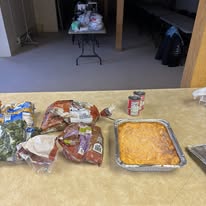
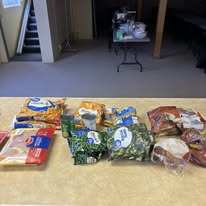
First round of meal delivery in November 2025 to a family of 4.
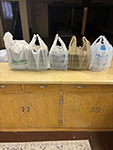
Second round of meal delivery to a different family of 4 in November 2025
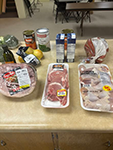
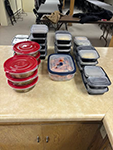
2025 Christmas Eve meal in which we fed 19 people. The meal consisted of turkey, ham, green beans, stuffing and dessert.
We then made a separate meal for 11 workers at a local nursing home and delivered and prayed over the workers.
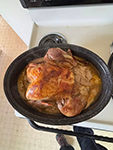

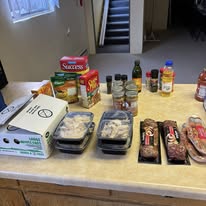
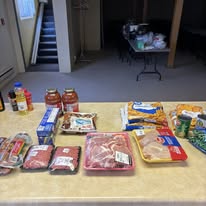
February 2026, 42 freezer meals were made to be distributed to families in need.